
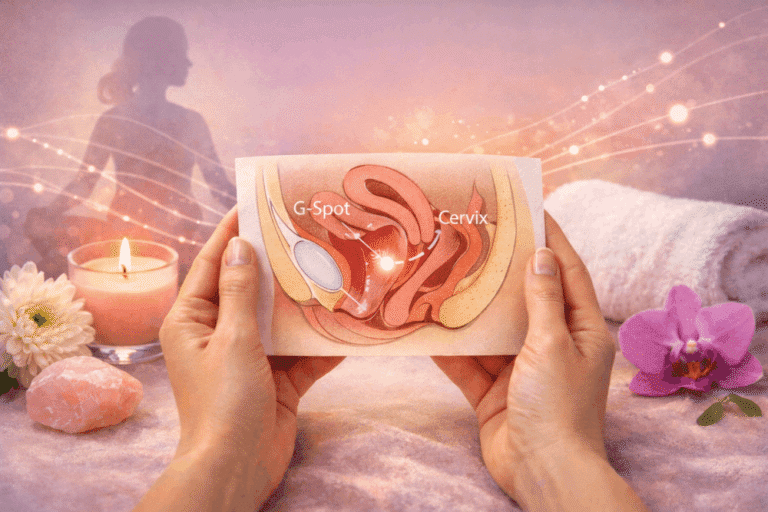
What is Vaginal Mapping?
Vaginal mapping is a special experience for vagina owners. Because of the non-visible, internal nature of the vagina, it’s quite common for someone to have never explored their own physical architecture. When you set aside generous, unrushed time for internal exploration and sensory discovery, this is vaginal mapping. You can explore mapping yourself, or if you’d rather have guidance, you can book a session with a professional.
How is this different from Vulva or Yoni Mapping?
Vaginal mapping refers to the internal genital anatomy (introitus, g-spot, cervix, etc). Vulva mapping refers to the external anatomy (labia, clitoris, vestibule, etc). Yoni mapping is a term that refers to both internal and external anatomy. The word ‘yoni’ is derived from Sanskrit and translates to ‘sacred source’, meaning the whole area from a spiritual or holistic perspetive. A client can request either internal or external mapping, but in practice, the actual experience most often includes both inner and outer.
Why Explore Vaginal Mapping?
There are many good reasons to do vaginal mapping. The vagina is a sensitive and constantly changing organ of the body… from menstrual cycles to childbirth to post menopause. Located at the second chakra, the vagina is positioned at the heart of one’s emotional and intuitive center, and as such, it can accumulate tension, pain or numbness over time. This means that its ability to feel fully can be easily compromised. Spending time carefully exploring any places of sensitivity, pain, or pleasure is an investment in your health and bodily awareness. The exploration should be slow and without a sexual goal like orgasm. It can be deeply healing to have simple compassionate touch, with no agenda other than curiosity and insight.
Benefits of Vaginal Mapping
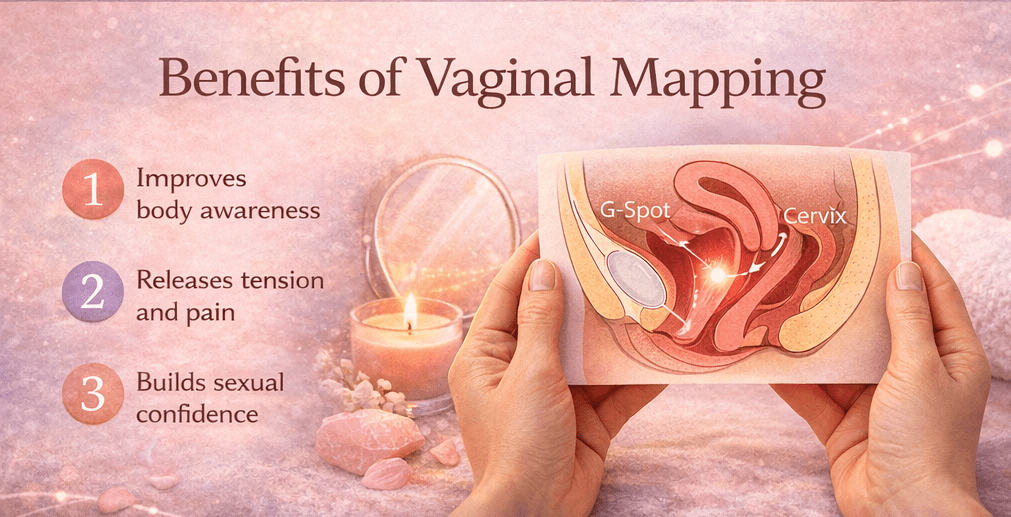
The most immediate benefit from mapping is in getting to know your body. It is one thing to study anatomical pictures in books, but quite another to have a 3D experience of mapping. Simultaneous touching and naming the part gives you a direct sensory experience of where something is and how it feels. It is the most immediate way to learn.
- Self-care. Mapping is a form of self-care where you not only learn about the many exquisite parts of your genitals, but you begin to appreciate their uniqueness and beauty. Mapping sessions often feel emotionally nourishing.
- Pain. You can identify any tension through the process of mapping since it is designed to uncover sensation. The body can harbor tension through trigger points and the vagina is no exception. If there has been trauma, mapping is a way to gently hold it and release it back to neutral. Sometimes memories come up and can be shared and witnessed for healing.
- Pleasure. While mapping is not inherently a sexual experience, it can sometimes feel pleasurable or erotic. Emotional reactions such as laughter or crying, and physical arousal can appear. These are all great experiences to embrace as a way of inviting and accepting your own pleasure.
- Knowledge. Finally, mapping can give you improved sexual confidence through knowledge. When you understand the pleasure zones of your body, you have more confidence in your own skin. It empowers you to be able to communicate what you know and enjoy during intimacy with a partner.
What Happens in a Mapping Session
By yourself. Mapping sessions are best done in a safe and comfortable space where you are alone and have plenty of privacy. You can bring a mirror, some lube, and towels for yourself. Learning about and even having a list of anatomy terms can be helpful. Find a comfortable position and breathe slowly as you move your hands across your belly, breasts, and thighs. Eventually moving toward the vulva, you can begin with a simple massage of the mons and outer labia.
Apply lube as you introduce touch to the inner labia. You can explore up toward the clitoris or down toward the introitus, taking time with the mirror to observe where everything is. Stay on the outside as long as you wish, perhaps circling the ‘clock’ of the introitus. The intention should be slowness and noticing your sensations. Pause often. The external vulva mapping may be enough for one session; you can save the internal vaginal explorations for another time. Take time to breathe and register the impact of these explorations, perhaps journaling what you felt and saw with appreciation.
With a practitioner. Although a mapping session happens with another person, it is neither like a gynecological exam nor a sexual encounter. The practitioner will create a safe space where you can feel relaxed, curious, and tender toward yourself. A practitioner will wear gloves, use warm lube, and apply touch in a slow, compassionate way, giving you choices about what you’d like to learn or explore. The advantage of a practitioner is the level of relaxation you can feel in a session, and the confidence you find as you are guided to discover parts of yourself you hadn’t experienced before. A qualified practitioner is able to hold space for any emotions or stories that come up, and helps you to integrate your learning at the end. The respect, self-care, and pleasure you feel in a session can be transformative.
Take-aways
At its heart, vaginal mapping is not about performance or fixing anything. It’s about listening. Vaginal mapping helps you know your body from the inside out. By taking time to explore and understand your internal landscape, you cultivate a kinder, more informed relationship with your body. This gentle practice can become a meaningful form of self-care, supporting both emotional and physical well-being.